
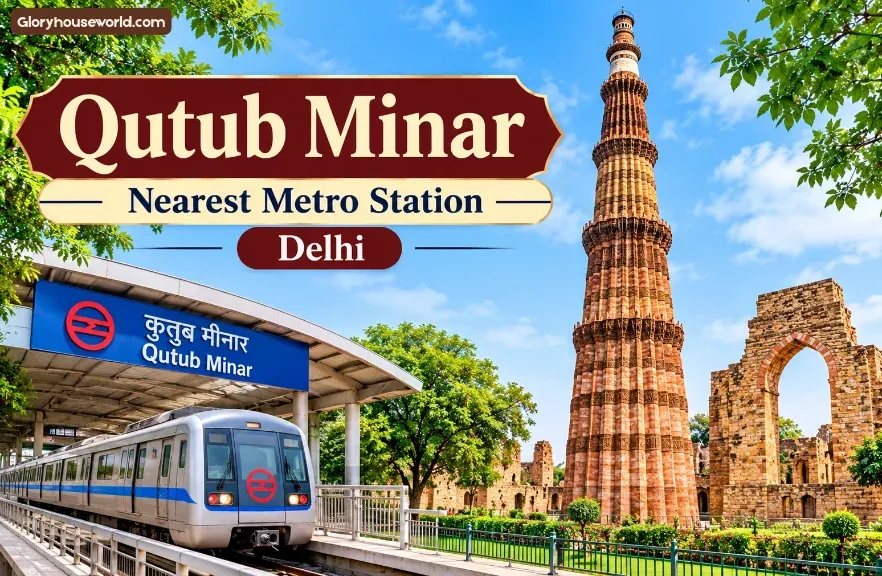
The Qutub Minar nearest metro station is Qutab Minar Station on the Yellow Line, under 1 km (~700–860 m) from the monument entrance — an 8–10 minute walk after exiting from Gate No. 1 on Anuvrat Marg. The complex is open every day from 7:00 AM to 5:00 PM (last entry by 4:30 PM). Entry costs ₹35 online for Indian adults and ₹550 online for foreign tourists; children under 15 enter free. Book tickets on the ASI portal in advance to skip the counter queue.
Introduction
Planning a visit to one of Delhi’s most iconic landmarks? The first question almost every traveller asks is: “What is the Qutub Minar nearest metro station?”
The good news is that the Delhi Metro Rail Corporation (DMRC) has made this visit remarkably easy. The dedicated Qutub Minar nearest metro station sits barely a ten-minute walk from the main entrance of the complex, eliminating the stress of traffic, parking woes, and expensive cab rides.
This guide covers everything you need to plan your trip smoothly — the correct station name, the right exit gate, train timings, fare tables, routes from key parts of Delhi, and a complete overview of the Qutub Minar complex itself, including history, what to see inside, ticket prices, and photography rules.
| Detail | Information |
|---|---|
| Nearest Metro Station Name | Qutab Minar Metro Station |
| Metro Line | Yellow Line (Line 2) |
| Station Type | Elevated |
| Gate No. | Gate No. 1 (Anuvrat Marg) |
| Distance to Monument | Under 1 km (~700–860 m) |
| Walk Time | 8–10 minutes |
| First Train (towards Samaypur Badli) | 05:20 AM |
| Last Train (towards Samaypur Badli) | 11:25 PM |
| First Train (towards Millennium City Centre) | 05:49 AM |
| Last Train (towards Millennium City Centre) | 11:55 PM |
| Station Contact No. | 8800793145 |
| ATM at Station | Yes (State Bank of India) |
| Parking | Yes (paid) |
| Divyang Friendly | Yes |
| Qutub Minar Opening Time | 7:00 AM |
| Qutub Minar Closing Time | 5:00 PM |
| Indian Entry Fee (Online) | ₹35 |
| Indian Entry Fee (Counter) | ₹40 |
| Foreign Tourist Entry Fee (Online) | ₹550 |
| Foreign Tourist Entry Fee (Counter) | ₹600 |
| Qutub Minar Height | 72.5 m (238 ft) |
| Number of Steps Inside | 379 |
| UNESCO Status | World Heritage Site (1993) |
What Is the Qutub Minar Nearest Metro Station?
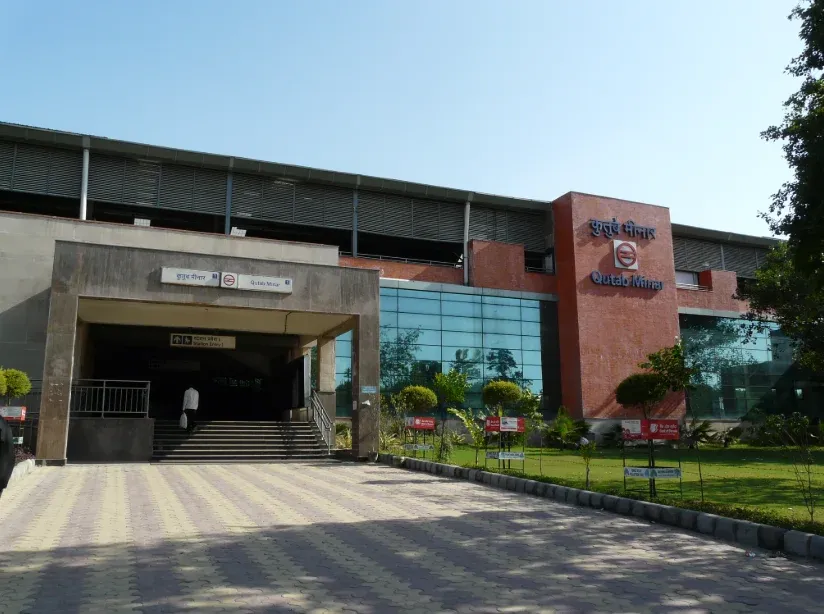
The Qutub Minar nearest metro station is simply named Qutab Minar Metro Station. It is an elevated station on the Yellow Line (Line 2) of the Delhi Metro, located on Anuvrat Marg in New Delhi (PIN: 110030).
The station sits between Saket (the previous stop heading north) and Chhatarpur (the next stop heading south toward Gurugram). It was inaugurated on 21 June 2010 as part of the 14.47-km fully elevated corridor between Qutab Minar and HUDA City Centre (now known as Millennium City Centre Gurugram).
During peak hours, Qutab Minar Metro Station also functions as an alternate southern terminus on the Yellow Line, alongside Sultanpur — a fact that matters if you are catching a train back toward central Delhi during busy periods.
Qutub Minar Nearest Metro Station Name
The official name is Qutab Minar Metro Station (sometimes spelled Qutub Minar Metro Station). The station code used by DMRC is QM. You will find it listed on every Yellow Line timetable and metro route map under this name.
Qutub Minar Nearest Metro Station Gate No.
This is one of the most searched queries by visitors, and the answer is straightforward.
Qutab Minar Metro Station has only one entry/exit gate:
| Gate No. | Exit Leads To |
|---|---|
| Gate No. 1 | Anuvrat Marg — the main road leading toward the Qutub Minar complex |
After exiting from Gate No. 1, turn right and follow the pedestrian path along Anuvrat Marg. The main entrance of the Qutub Minar complex will be visible within an 8–10 minute walk. Signboards at street level guide you toward the monument.
Tip: Auto-rickshaws and e-rickshaws are available right outside Gate No. 1 and charge approximately ₹30–50 for the short ride to the monument entrance. E-rickshaws are the more comfortable and eco-friendly option for the elderly or for those with young children.
Qutub Minar Nearest Metro Station Distance
The Qutub Minar nearest metro station distance from the monument entrance is under 1 km (~700–860 m), depending on which part of the complex entrance you are heading to. This translates to a comfortable 8–10 minute walk on a flat, paved path.
For those who prefer to avoid the walk entirely, the same route takes under 3 minutes by auto-rickshaw.
Here is a quick comparison of distances from other nearby stations:
| Metro Station | Distance to Qutub Minar |
|---|---|
| Qutab Minar (nearest) | Under 1 km (~700–860 m) |
| Saket | ~2.5 km |
| Malviya Nagar | ~3.5 km |
| Sultanpur | ~5 km |
| Hauz Khas | ~5.5 km |
There is a clear reason the Qutab Minar Metro Station is the designated Delhi Qutub Minar nearest metro station — no other station comes anywhere close in terms of walking convenience.
How to Reach Qutub Minar by Metro: Step-by-Step Route
Qutub Minar Nearest Metro Station Route (General)
- Board the Yellow Line at any station along the Delhi Metro network.
- Travel toward Millennium City Centre Gurugram (southbound direction).
- Alight at Qutab Minar Metro Station.
- Exit from Gate No. 1 onto Anuvrat Marg.
- Walk straight for under 1 km (~700–860 m) (8–10 minutes) or take a short auto-rickshaw ride.
- You will arrive at the main entrance of the Qutub Minar complex.
Routes from Major Delhi Landmarks
From Rajiv Chowk (Connaught Place)
- Board the Yellow Line at Rajiv Chowk toward Millennium City Centre.
- Travel through stations: Patel Chowk → Central Secretariat → Udyog Bhawan → Lok Kalyan Marg → Jor Bagh → IIT → Hauz Khas → Malviya Nagar → Saket → Qutab Minar.
- Journey time: approx. 25–30 minutes.
- No interchange required.
From New Delhi Railway Station
- Board the Yellow Line at New Delhi toward Millennium City Centre.
- Journey time: approx. 35–40 minutes.
- No interchange required.
From IGI Airport (Terminal 3)
- Take the Airport Express Line from Terminal 3 to New Delhi Metro Station.
- Switch to the Yellow Line toward Millennium City Centre.
- Alight at Qutab Minar Metro Station.
- Total journey time: approx. 45–55 minutes.
From Kashmere Gate / Old Delhi
- Board any line to Rajiv Chowk, then switch to the Yellow Line (southbound).
- Or take the Yellow Line directly from Kashmere Gate to Qutab Minar (direct, same line).
- Journey time from Kashmere Gate: approx. 45–50 minutes.
From Noida or East Delhi
- Take the Blue Line to Rajiv Chowk.
- Switch to the Yellow Line toward Millennium City Centre.
- Total journey time: approx. 50–60 minutes.
From Gurugram (Millennium City Centre / Sikanderpur)
- Board the Yellow Line at Millennium City Centre or Sikanderpur toward Samaypur Badli.
- Alight at Qutab Minar Metro Station.
- Journey time from Millennium City Centre: approx. 30–40 minutes.
Stone Cafe Qutub Minar Nearest Metro Station
The Stone Cafe is a heritage-style dining spot in the Mehrauli area, popular with tourists exploring the Qutub complex. The Stone Cafe Qutub Minar nearest metro station is also Qutab Minar Metro Station on the Yellow Line.
After exiting Gate No. 1, the Mehrauli area’s cafes and restaurants — including Stone Cafe — are accessible within a short auto-rickshaw or e-rickshaw ride, mostly within 1–2 km of the station.
Nearby eating options walkable from Qutab Minar Metro Station:
| Dining Spot | Distance from Station | Type |
|---|---|---|
| Stone Cafe | ~1.5 km | Heritage cafe, Mehrauli |
| Local dhabas on Anuvrat Marg | ~300 m | Budget North Indian |
| Mehrauli Village eateries | ~1 km | Street food, snacks |
| Saket Select Citywalk (mall food court) | ~2.5 km | Multi-cuisine |
Qutab Minar Metro Station: Facilities and Amenities
The station is well-equipped for both tourists and daily commuters.
| Facility | Availability |
|---|---|
| Platforms | Two side platforms |
| ATM | Yes — State Bank of India |
| Paid Parking | Yes (available on site) |
| Divyang / Wheelchair Access | Yes (Gate No. 1 is accessible) |
| Token Vending Machines | Yes |
| Metro Card Vending | Yes (at concourse level) |
| Toilets | Available |
| Feeder Bus | No dedicated feeder bus |
Station layout:
- Ground level (G): Entry/exit
- Concourse level (L1): Fare control, station agent, Metro Card vending machines
- Platform level (L2): Two side platforms (doors open on the left for both platforms)
Nearby DTC bus stops include Ahinsa Sthal, Andheria Bagh More, Mehrauli Terminal, and the Qutub Minar bus stand, giving commuters multiple last-mile options.
Qutub Minar Metro Station Timings
| Platform | Direction | First Train | Last Train |
|---|---|---|---|
| Platform 1 | Millennium City Centre (Gurugram) | 05:49 AM | 11:55 PM |
| Platform 2 | Samaypur Badli | 05:20 AM | 11:25 PM |
Train frequency:
- Weekdays (peak hours): every 3–5 minutes
- Weekends: slightly longer intervals
Delhi Metro Fare to Qutub Minar
DMRC fares are distance-based. Use the chart below to estimate your fare:
| Distance Travelled | Metro Fare |
|---|---|
| 0 – 2 km | ₹10 |
| 2 – 5 km | ₹20 |
| 5 – 12 km | ₹30 |
| 12 – 21 km | ₹40 |
| 21 – 32 km | ₹50 |
| 32+ km | ₹60 |
Using a Metro Smart Card gives a 10% discount on every trip. Cards are available and rechargeable at the token vending machines at Qutab Minar Metro Station.
Sample fares from popular stations:
| Boarding Station | Approx. Fare (Token) | Approx. Fare (Smart Card) |
|---|---|---|
| Rajiv Chowk | ₹30 | ₹27 |
| New Delhi | ₹30 | ₹27 |
| Kashmere Gate | ₹40 | ₹36 |
| Millennium City Centre | ₹30 | ₹27 |
About Qutub Minar: History, Height, and Significance
Qutub Minar History
The Qutub Minar is not just a tower. It is the foundation stone of Delhi as a capital city.
Construction began in 1192 CE under Qutb-ud-din Aibak, the first ruler of the Mamluk (Slave) Dynasty and founder of the Delhi Sultanate. Aibak laid the base and completed the first storey — rising roughly 29 metres — before his death in 1210 CE. His son-in-law and successor, Shams-ud-din Iltutmish, added three more storeys and completed the main tower by approximately 1220 CE.
The minaret suffered lightning damage on more than one occasion. Firoz Shah Tughlaq (1351–1388 CE) carried out significant restoration work and added the top two storeys in white marble, giving the structure the five-storey form it retains today. Sikandar Lodi further repaired the structure in the late 15th century. Major restoration work was also carried out by British officer Major R. Smith in 1829.
The Qutub Complex, which houses the minaret along with its surrounding monuments, was inscribed as a UNESCO World Heritage Site in 1993.
Who Built Qutub Minar?
Qutb-ud-din Aibak initiated construction in 1192 CE. Iltutmish completed it by around 1220 CE. Firoz Shah Tughlaq restored and added the upper storeys in white marble after lightning damage in the 14th century. It was truly a multi-century, multi-ruler achievement.
Qutub Minar Height
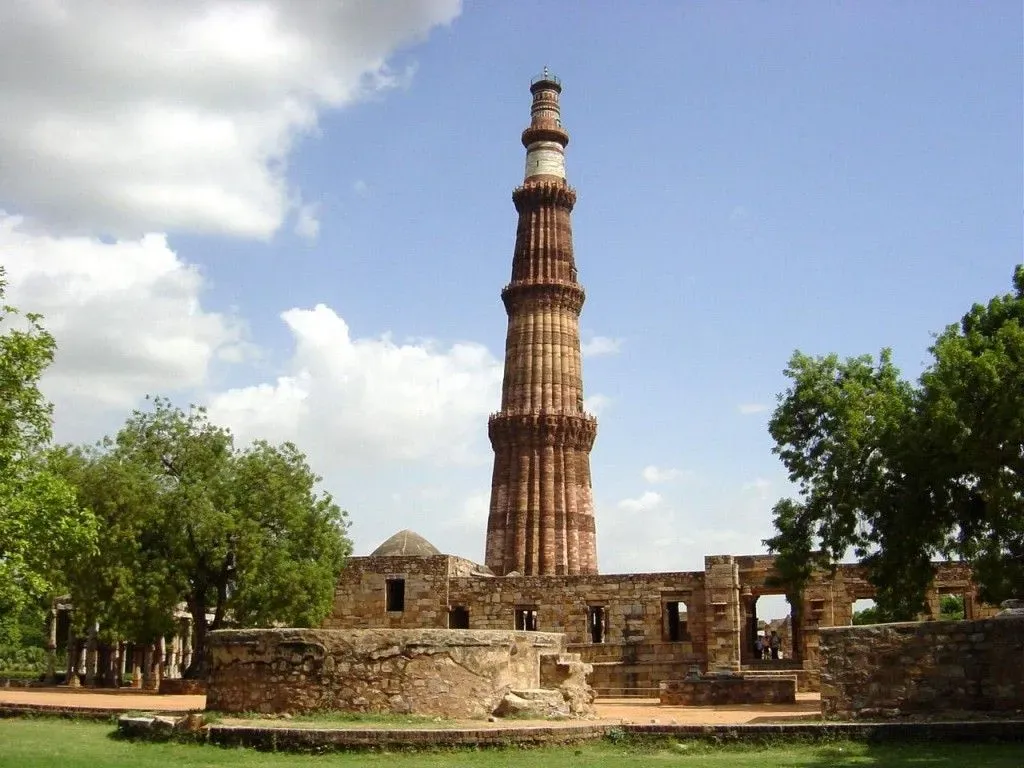
Qutub Minar stands at a precise 72.5 metres (238 feet), making it the tallest brick minaret in the world. The structure tapers from a base diameter of 14.3 metres to just 2.7 metres at the top. It has 379 steps in its interior spiral staircase — though public entry inside the tower has been restricted since December 4, 1981, when a stampede caused by a staircase lighting failure resulted in casualties.
Structural note: The Qutub Minar tilts slightly — approximately 65 cm from the vertical — which falls well within safe structural limits. This tilt is a result of the multiple additions and restoration phases carried out by different rulers over centuries.
Qutub Minar Timing
Timings may vary seasonally or during special events. Always verify on the official ASI website before visiting.
| Day | Opening Time | Closing Time |
|---|---|---|
| Monday | 7:00 AM | 5:00 PM |
| Tuesday | 7:00 AM | 5:00 PM |
| Wednesday | 7:00 AM | 5:00 PM |
| Thursday | 7:00 AM | 5:00 PM |
| Friday | 7:00 AM | 5:00 PM |
| Saturday | 7:00 AM | 5:00 PM |
| Sunday | 7:00 AM | 5:00 PM |
Qutub Minar is open every day of the week with no weekly closure day.
Qutub Minar Opening Time: 7:00 AM
Qutub Minar Closing Time: 5:00 PM (last entry recommended by 4:30 PM)
An evening illumination show was available for some periods (timings: approximately 7:00 PM – 10:00 PM). Confirm current arrangements with ASI before planning an evening visit, as this is not consistently operational.
Best time to visit Qutub Minar: Early morning between 7:00 AM and 9:00 AM to avoid crowds and enjoy cooler temperatures. The best season overall is November to March.
Qutub Minar Ticket
| Visitor Category | Online Ticket | Counter Ticket |
|---|---|---|
| Indian Adults | ₹35 | ₹40 |
| SAARC / BIMSTEC Citizens | ₹35 | ₹35 |
| Foreign Tourists | ₹550 | ₹600 |
| Children below 15 years | Free | Free |
| Video Camera | ₹25 extra | ₹25 extra |
Note: Personal photography with smartphones and standard cameras is generally permitted. Tripods, stands, and commercial filming require prior written permission from the ASI regional office. Unauthorized tripods may be confiscated at the security gate.
Qutub Minar holds the distinction of being the first monument in India where e-ticketing (online ticketing) was introduced. Book online through the ASI (Archaeological Survey of India) official portal to save money and skip the counter queue.
Inside the Qutub Minar Complex: What to See
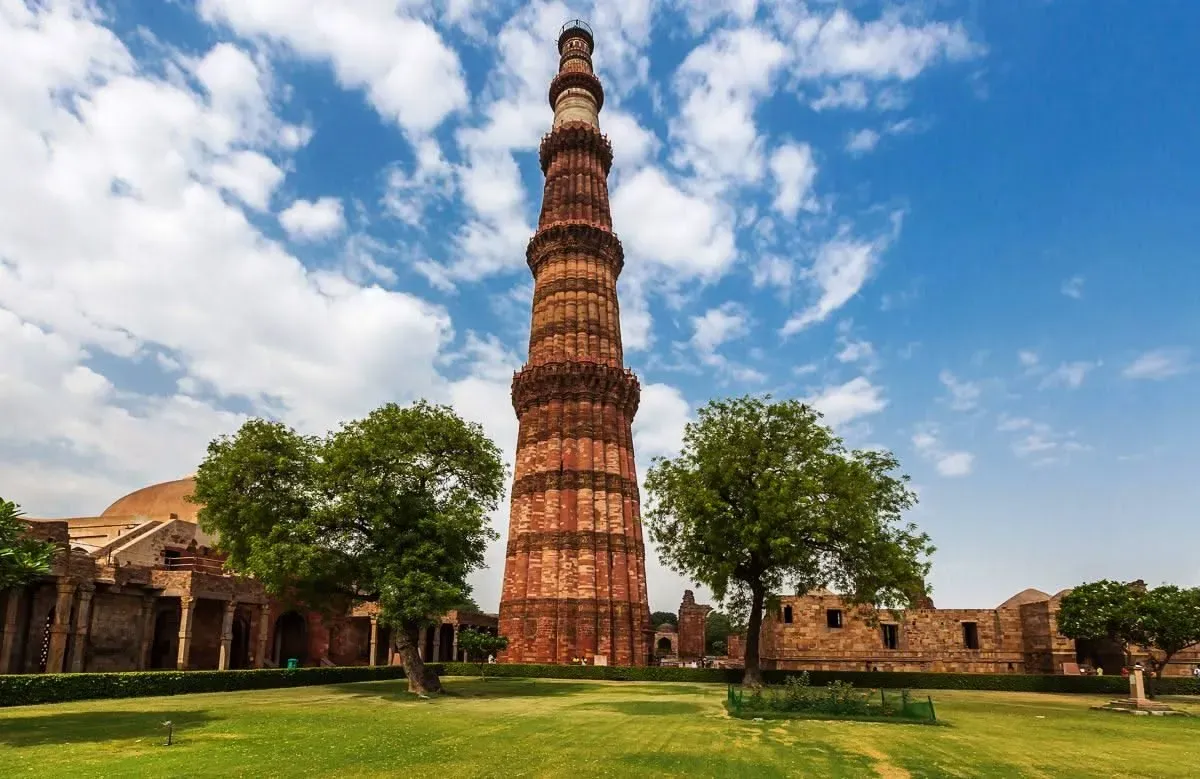
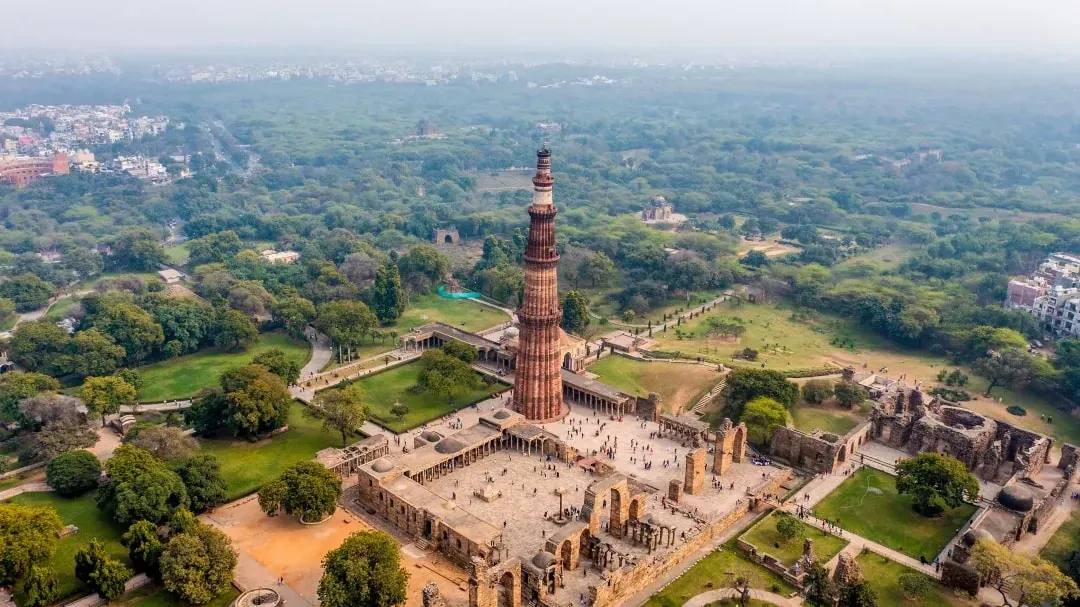
The Qutub Minar is not just one tower — it is an entire complex of layered history spanning seven centuries of construction under different dynasties. Plan at least 2–3 hours to explore it properly.
Key Monuments Inside the Complex
1. Qutub Minar (The Main Tower)
The five-storey sandstone and marble minaret is the centrepiece. Each storey is separated by a projecting balcony with intricate carvings. Persian-Arabic and Nagari inscriptions on the exterior document the complete history of its construction, repairs, and rulers. The 379-step spiral staircase is closed to the public but the exterior is entirely accessible.
2. Quwwat-ul-Islam Mosque
Built by Qutb-ud-din Aibak in 1192 CE, this is the first mosque built by the Delhi Sultanate and one of the earliest surviving mosques in India. The mosque was constructed using materials from approximately 20 demolished Hindu and Jain temples. The arched screen at its entrance, decorated with both Islamic calligraphy and Hindu floral motifs, is one of the most fascinating examples of early Indo-Islamic art.
3. Iron Pillar of Delhi
Standing in the courtyard of the mosque, this remarkable 7.2-metre iron pillar dates to the 4th–5th century CE — predating the Qutub complex by over 700 years. It was erected during the reign of Chandragupta II of the Gupta dynasty. The pillar’s most celebrated quality is its extraordinary resistance to rust, which continues to intrigue metallurgists and scientists worldwide.
4. Alai Darwaza
Built by Alauddin Khalji in 1311 CE, the Alai Darwaza is a magnificent domed gateway that served as the southern entrance to the Quwwat-ul-Islam Mosque. It is considered a masterpiece of early Indo-Islamic architecture, featuring red sandstone with white marble inlays and intricate geometric lattice screens.
5. Alai Minar (Unfinished)
Alauddin Khalji also began construction of a second, grander minaret — the Alai Minar — intending it to be twice the height of the Qutub Minar. Only the first storey (reaching about 24 metres) was completed before his death in 1316 CE. It stands today as a symbol of ambition left unrealised.
6. Tomb of Iltutmish
Built around 1235 CE, the Tomb of Shams-ud-din Iltutmish is one of the earliest Islamic mausoleums in India. Its interior features beautifully carved sandstone panels combining Quranic calligraphy with traditional Indian motifs.
7. Smith’s Folly (Chhatri)
In 1829, British officer Major R. Smith placed a Bengali-style chhatri (cupola) atop the Qutub Minar during restoration work. This structure — later referred to as “Smith’s Folly” because it clashed badly with the minaret’s original design — was eventually removed and relocated to the lawn beside the main tower, where it remains today.
Bollywood Connection: A Lesser-Known Fact
Bollywood actor and director Dev Anand planned to shoot the song “Dil Ka Bhanwar Kare Pukar” from the film Tere Ghar Ke Samne (1963) inside the Qutub Minar. However, the cameras of that era were too large to fit through the minaret’s narrow interior passage. The song was ultimately shot inside a specially built replica of the tower. This makes the Qutub Minar one of Bollywood’s most dramatic “almost” filming locations.
Visitor Tips: What to Carry and Wear
Before you go, make sure to:
- Book tickets online via the ASI portal to avoid queues (Indian adults: ₹35; Foreign: ₹550)
- Carry a valid photo ID (passport for foreign nationals)
- Wear comfortable, flat walking shoes — the complex has uneven stone surfaces throughout
- Bring a water bottle — there are no water vending points inside the complex
- Carry cash for auto-rickshaws from the metro station and for small purchases outside
- Avoid peak summer (May–June) — temperatures in Delhi regularly cross 42°C, and there is minimal shade inside the complex
- Best months to visit: November to March, when Delhi weather is mild and skies are clear
Inside the complex:
- No food or drinks are allowed inside the monument area
- Bags go through security screening at the entrance gate
- The complex is entirely outdoors, so plan for sun exposure
History Timeline: Qutub Minar
| Year | Event |
|---|---|
| 1192 CE | Construction begins under Qutb-ud-din Aibak (base + first storey) |
| 1193 CE | Quwwat-ul-Islam Mosque construction begins |
| 1210 CE | Aibak dies; first storey complete |
| 1220 CE | Iltutmish completes three additional storeys; total: four storeys |
| 1235 CE | Tomb of Iltutmish built within the complex |
| 1311 CE | Alai Darwaza built by Alauddin Khalji |
| c. 1316 CE | Alai Minar project abandoned after Khalji’s death |
| 1351–1388 CE | Firoz Shah Tughlaq restores and adds top storey in white marble |
| 1489–1517 CE | Sikandar Lodi carries out further repairs |
| 1829 CE | Major R. Smith restores the tower; adds the chhatri (later removed from top) |
| 4 Dec 1981 | Stampede due to lighting failure; public entry inside the minaret permanently banned |
| 1993 CE | UNESCO inscribes Qutub Complex as a World Heritage Site (Ref. No. 233) |
| 21 June 2010 | Qutab Minar Metro Station inaugurated on the Yellow Line |
Places to Visit Near Qutub Minar
After exploring the complex, the surrounding Mehrauli area and beyond offer excellent options:
| Place | Distance | Highlights |
|---|---|---|
| Mehrauli Archaeological Park | ~1 km | 100+ monuments across 200 acres |
| Jahaz Mahal | ~2 km | 15th-century Lodi-era structure |
| Zafar Mahal | ~2 km | Last Mughal palace in Delhi |
| Chhatarpur Temple | ~4 km | One of the largest temple complexes in Delhi |
| Hauz Khas Village | ~5 km | Medieval reservoir, trendy cafes |
| Begumpur Mosque | ~5 km | Tughlaq-era mosque, rarely crowded |
| Dilli Haat INA | ~8 km | Craft market, regional cuisines |
Conclusion
Visiting Qutub Minar has never been more accessible. The Qutub Minar nearest metro station — Qutab Minar Metro Station on the Yellow Line — places one of the world’s most remarkable heritage monuments within a ten-minute walk of a modern, comfortable metro network.
Exit from Gate No. 1 on Anuvrat Marg, walk under 1 km (~700–860 m, or hop on an auto-rickshaw for ₹30–50), and you are at the gates of a complex that holds over 800 years of Delhi’s layered history. Plan your visit between 7:00 AM and 5:00 PM, carry your ticket (book online at ₹35 to save time and queue), and allow at least two to three hours to do the complex justice.
The best seasons are October to March, when Delhi’s skies are clear and the sandstone of the minaret glows warmly in early morning or late afternoon light. Travel light, wear comfortable shoes, and carry water — the entire complex is outdoors and there is plenty to cover on foot.
Explore More Iconic Houses And Places: –
- Nearest Metro Station To Charminar Hyderabad
- Taj Falaknuma Palace Hyderabad
- Ankita Lokhande House
- Suvarna Mahal Jaipur
- Kriti Sanon House
- Ram Charan House in Hyderabad
- Neemrana Fort Palace Rajasthan
- Virat Kohli House In London And Other Residences
- Mahesh Babu House In Hyderabad
- Vijay Thalapathy House
- Nearest Metro Station To Charminar Hyderabad
- Dhanush House Chennai
- Mammootty House Kochi
- Hrithik Roshan House
- Ranveer Singh House
- Shilpa Shetty House
- Aamir Khan House
- Sourav Joshi House
- Raj Thackeray House
- Rajinikanth House in Chennai
- Delhi Purana Qila Nearest Metro Station
- Prabhas House
FAQs About Qutub Minar Nearest Metro Station
Q: What is the Qutub Minar nearest metro station?
A: Qutab Minar Metro Station on the Yellow Line.
Q: What is the Qutub Minar nearest metro station gate no.?
A: Gate No. 1, which exits onto Anuvrat Marg.
Q: What is the Qutub Minar nearest metro station distance?
A: Under 1 km (~700–860 m) — about an 8–10 minute walk.
Q: What are the Qutub Minar timings?
A: Open daily from 7:00 AM to 5:00 PM. Last entry recommended by 4:30 PM.
Q: What is the Qutub Minar ticket price?
A: ₹35 online for Indian adults; ₹550 online for foreign tourists. Free for children under 15.
Q: What is the Qutub Minar closing time?
A: 5:00 PM. Last entry recommended by 4:30 PM.
Q: Who built Qutub Minar?
A: Construction was started by Qutb-ud-din Aibak in 1192 CE and completed by Iltutmish around 1220 CE.
Q: What is the Qutub Minar height?
A: 72.5 metres (238 feet) — the world’s tallest brick minaret.
Q: How many steps are inside Qutub Minar?
A: 379 steps in the interior spiral staircase. Public entry inside is banned since 1981.
Q: Is photography allowed at Qutub Minar?
A: Yes. Smartphones and standard cameras are permitted. Tripods and commercial filming require prior ASI permission. Drones are prohibited.
Q: Is there parking at Qutab Minar Metro Station?
A: Yes, paid parking is available at the station.
Q: What is the Qutub Minar opening time?
A: 7:00 AM every day of the week.
Q: Is Qutub Minar closed on Monday?
A: No. Qutub Minar is open all seven days of the week with no regular closure day.
